

How German SMEs Can Enter African Markets in 2026
Why Africa Matters for German SMEs in 2026
For many German small and medium-sized enterprises, Africa is still seen as a high-risk and complex region. In reality, Africa is one of the fastest-growing business and investment destinations for German companies in 2026.

Africa is no longer a niche export market. It is rapidly becoming a global growth engine for industrial equipment, renewable energy, infrastructure, and manufacturing technology. With a population exceeding 1.4 billion, expanding middle classes, and large-scale investment in energy and industry, African markets are generating sustained demand for German engineering and technology.
At the same time, European markets are stagnating. Many German SMEs face shrinking margins, intense competition, and limited growth inside the EU. Africa offers something fundamentally different:
new customers, expanding industrial sectors, and long-term market growth.
However, entering African markets requires a structured market entry strategy, not the same approach used for European expansion.
The Biggest Mistake: Treating Africa as One Market
One of the most common errors German companies make is viewing Africa as a single market. In reality, Africa consists of more than 50 countries, each with its own:
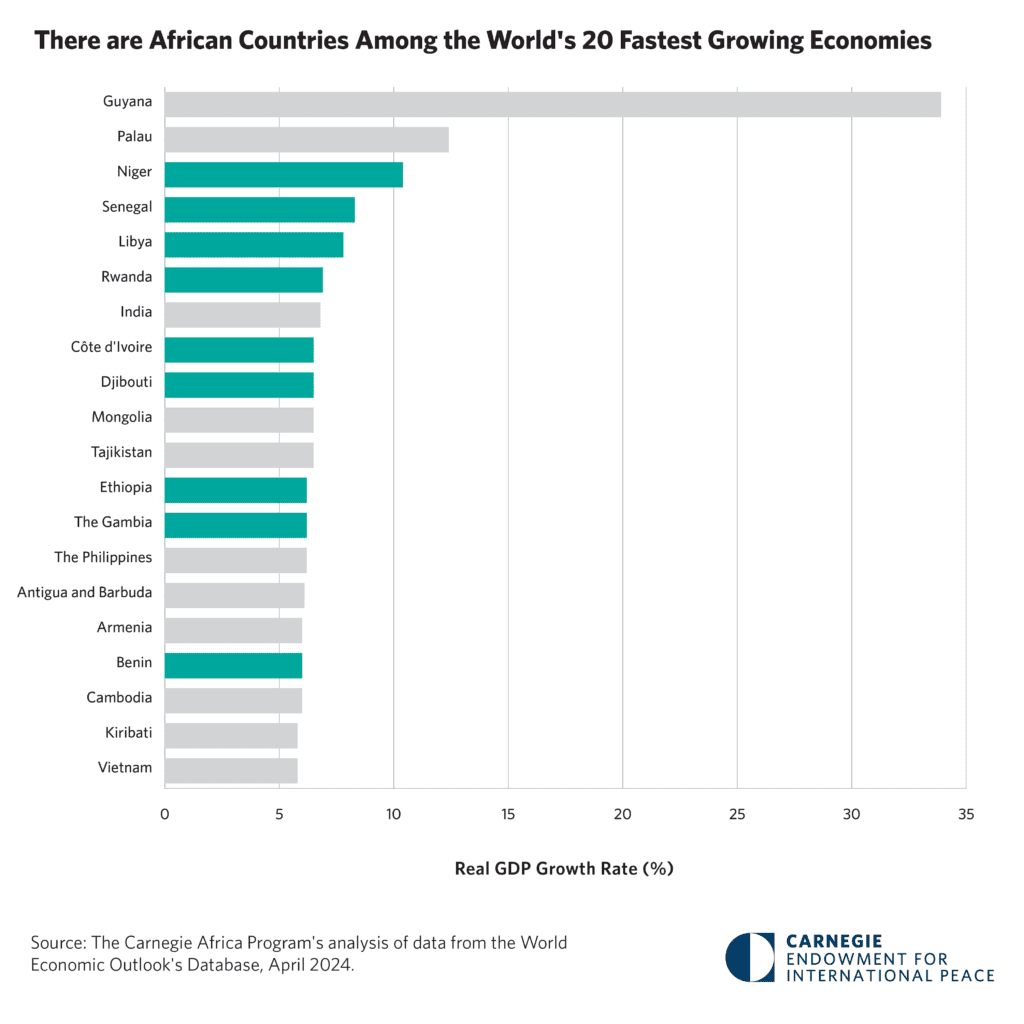
The Carnegie Africa Program’s analysis of data from the World Economic Outlook’s Database
- import and customs regulations
- currencies and payment systems
- industrial and energy structures
- legal frameworks
- political and commercial risk profiles
Selling industrial or energy technology in Morocco is completely different from selling it in Nigeria, Kenya, or Egypt. Demand, pricing, procurement, and financing vary widely across countries.
Successful Africa market entry always begins with country selection and market prioritization.
Instead of asking: “How do we enter Africa?”
German SMEs should ask:
Which African country offers the highest market demand, lowest commercial risk, and fastest path to revenue for our product?
Where German Technology Is Most in Demand in Africa
German SMEs have strong competitive advantages in several high-growth African sectors:
- Industrial manufacturing and processing equipment
- Renewable energy and energy infrastructure
- Water and wastewater technologies
- Construction and building materials
- Automation, logistics, and industrial control systems
Across Africa, governments, utilities, EPC contractors, and private investors are actively seeking reliable European technology. While low-cost imports dominate some segments, serious buyers increasingly prefer German-quality systems for projects where performance, bankability, and lifetime cost matter.
This creates a powerful opportunity for German SMEs to position themselves as long-term technology and project partners, not commodity suppliers.
How German SMEs Should Enter African Markets in 2026
A professional Africa market entry strategy follows four structured phases.
Phase 1 – Market Research and Demand Validation
Before any sales activity, German companies must answer three core questions:
- Who buys our product in this African market?
- What solutions do they currently use?
- What price levels and procurement channels exist?
This requires primary market research, including interviews with local buyers, EPCs, developers, distributors, and regulators.
Without this step, companies often enter the wrong country or approach the right market with the wrong value proposition.
Phase 2 – Regulatory and Import Analysis
In Africa, import regulations determine commercial success.
Key factors include:
- customs duties and VAT
- product certification
- local content requirements
- currency and profit repatriation rules
- financing and payment mechanisms
Skipping this step often leads to failed projects, blocked shipments, or uncompetitive pricing.
Phase 3 – Partner and Distribution Strategy
In most African countries, local partners are essential.
German SMEs typically work through:
- distributors
- EPC companies
- system integrators
- project developers
Selecting the wrong partner can destroy a market entry. Proper partner due diligence is far more important than trade fair contacts or online searches.
Phase 4 – Commercial Market Testing
Before full-scale expansion, successful companies validate demand through:
- pilot projects
- initial shipments
- joint project bids
- reference installations
This phase converts market potential into real sales pipelines.
How German SMEs Reduce Africa Market Entry Risk with BAFA
One of the most powerful tools available to German SMEs is the BAFA Consulting Voucher programme.
Under this German government scheme, up to 85 percent of the cost of Africa market research and expansion strategy is reimbursed.
Companies can use BAFA funding to:
- analyse market demand
- assess regulatory barriers
- identify and screen partners
- design professional market entry strategies
This allows German SMEs to make data-driven Africa expansion decisions with minimal financial risk.
Why Africa Is a Market for Today, Not Tomorrow
Africa is not a future opportunity. It is a current investment and procurement market.
Industrial zones, renewable energy plants, water projects, and manufacturing facilities are being built right now. Companies that enter early will dominate supplier relationships for the next decade.
German SMEs that delay will compete against rivals that already have local references, distribution networks, and government relationships.
Conclusion
Africa is not risky.
Unresearched Africa expansion is.
German SMEs that combine market intelligence, regulatory understanding, partner selection, and BAFA-backed funding can build profitable and defensible African market positions.
2026 is not the year to ask if Africa matters.
It is the year to decide where in Africa you will win.
